


Colin Allen
Provost Professor, History & Philosophy of Science, Cognitive Science
Provost Professor and Director, Cognitive Science
Indiana University
Disciplines: Neuroscience / Cognitive Science and Philosophy
Colin Allen is Provost Professor of Cognitive Science and of History & Philosophy of Science in the College of Arts and Sciences at Indiana University, Bloomington, where he has been a faculty member since 2004. He also holds an adjunct appointment in the Department of Philosophy and is a faculty member of IU's Center for the Integrative Study of Animal Behavior and Program for Neuroscience. He became director of IU's Cognitive Science program in July 2011. Allen's main area of research is on the philosophical foundations of cognitive science, particularly with respect to nonhuman animals. He is interested in the scientific debates between ethology and comparative psychology, and current issues arising in cognitive ethology. Allen has also published on other topics in the philosophy of mind and philosophy of biology, and artificial intelligence. He coauthored Moral Machines: Teaching Robots Right from Wrong (Oxford University Press 2009) with Wendell Wallach and Species of Mind: The Philosophy and Biology of Cognitive Ethology (MIT Press 1998) with Marc Bekoff.
Website: http://mypage.iu.edu/~colallen/
Google+: https://plus.google.com/100881272681815227136
Articles

Our idea of what an intelligent machine looks like is evolving as scientists discover that human thought extends beyond the brain.
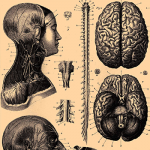
Scientists are studying how the entire body, not just the brain, aids us in cognitive tasks.